One of the big changes building on the Web over the past years has been the availability of increasingly sophisticated applications - for free. Some web developers who at one time invented from scratch are now becoming expert integrators of open source applications. It's an exciting development because it means more of us can be creative and inventive. You'd be amazed by the number of really impressive websites are built using open source applications like WordPress, Joomla, or SilverStripe. Or the incredible knowledge-sharing possibilities of wiki-based intranets and extranets.
Open source software isn't quite the same thing as social networking sites or web-based APIs such as Google Maps. Facebook, Myspace or even Blogger offer users free access, but are supported by data mining and advertising to pay for the servers, development and technical support. Open source systems are hosted on your own servers (or the servers you pay for), and stand apart from other installations of the same system.
Conceptually, though, open source and social networking sites share a basic principle: pooling knowledge and sharing expertise create value. Many open source systems are designed by individuals and groups who believe in collaboration (and the possibility that their system will catch on and they can go to IPO). I am constantly amazed and impressed by the dedication of core developers and the more casual contributors who bring tools into the digital commons.
Some links:
http://joomla.org/
http://www.silverstripe.com/
http://wordpress.com/
Top 10 Wiki Engines:
http://c2.com/cgi/wiki?TopTenWikiEngines

31.10.07


15.10.07
Sweet Canadian design of yesteryear
Catalogue for Amercians wishing to order 16 mm films : '76 -'77

CP Air carry-on bag... not sure exactly when...70's?

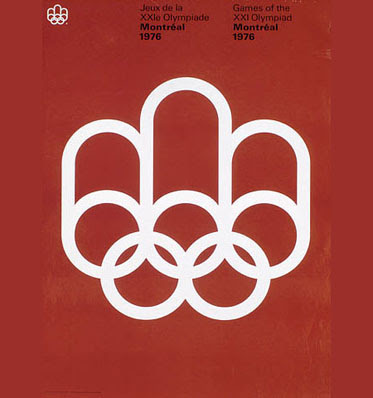
Logo for the 1976 Montréal Summer Olympics
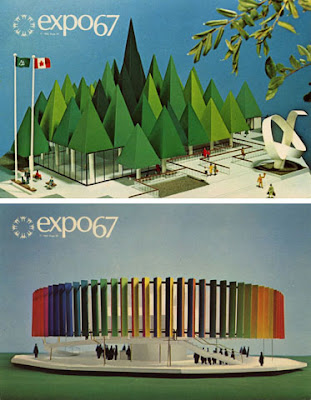
Postcards for Expo '67

CP Air carry-on bag... not sure exactly when...70's?

Logo for the 1976 Montréal Summer Olympics

Postcards for Expo '67

11.10.07
Web 2.0 on the Inside
In past blog postings we've talked about grassroots marketing as part of Web 2.0. A recent McKinsey report talks about adoption of Web 2.0 as part of a grassroots initiative within a company, and for a company. I find it interesting that Web 2.0 applications are not only changing the relationship between customers and companies, they are also changing the relationships among employees within a company.
Among Web 2.0 technologies, collaboration and communications technologies are the clear winners. I’ve “snipped” some interesting stuff from the McKinsey report (which you can see in full here, once you subscribe for free):
Wikis, which involves software enabling a group of people to contribute to an online document, encourage collaboration within companies, in particular for developing shared knowledge. One executive noted that they are particularly useful to develop a commonly agreed-upon terminology set - starting from the centre and translated into terms that are meaningful in specific end users' contexts. Wikis are also appealing because they capture anecdotal or unstructured information that might otherwise be lost, either because there was no way to capture it or the organization has outgrown its ability to gather and share knowledge informally.
Blogs were mentioned by many executives, as a way to communicate with customers and engage with critics, and therefore performing a productive discursive role. Some companies were also using mash-ups (combinations of two technologies to create a new application), such as displaying locations or photographs on maps, to address customer demands. Mash-ups using Google maps are one of my particular favourites because they are so easy to implement and they visually create a de-facto sense of community.
In an online discussion meant to derive insight from the quantitative results in the McKinsey report, it became clear that the ease of adoption of Web 2.0 was driving the grassroots push for communication and collaboration tools. One discussion participant claimed: "These projects started at the grassroots level, however the value was rapidly demonstrated."
The ease of exploring and adapting Web 2.0 technologies are elements that help advocates avoid typical implementation barriers. Among many respondents (described as Senior Executives), top-down management was seen as a hindrance, and that the best role for senior management was one of enabling adoption and setting of boundaries.
Measuring the impact of newly implemented Web 2.0 initiatives is not so straightforward, however. Some respondents were unable to claim that the use of Web 2.0 was providing clear competitive advantages. Other respondents claimed more qualitative effects such as engaging customers for product-development ideas and encouraging interest in collaboration and a stronger sense of community.
This last point brings us back to where I began. Web 2.0 is about enabling participation from all quarters, and this is the crux of how it is changing communications, business and communities.
Among Web 2.0 technologies, collaboration and communications technologies are the clear winners. I’ve “snipped” some interesting stuff from the McKinsey report (which you can see in full here, once you subscribe for free):
Wikis, which involves software enabling a group of people to contribute to an online document, encourage collaboration within companies, in particular for developing shared knowledge. One executive noted that they are particularly useful to develop a commonly agreed-upon terminology set - starting from the centre and translated into terms that are meaningful in specific end users' contexts. Wikis are also appealing because they capture anecdotal or unstructured information that might otherwise be lost, either because there was no way to capture it or the organization has outgrown its ability to gather and share knowledge informally.
Blogs were mentioned by many executives, as a way to communicate with customers and engage with critics, and therefore performing a productive discursive role. Some companies were also using mash-ups (combinations of two technologies to create a new application), such as displaying locations or photographs on maps, to address customer demands. Mash-ups using Google maps are one of my particular favourites because they are so easy to implement and they visually create a de-facto sense of community.
In an online discussion meant to derive insight from the quantitative results in the McKinsey report, it became clear that the ease of adoption of Web 2.0 was driving the grassroots push for communication and collaboration tools. One discussion participant claimed: "These projects started at the grassroots level, however the value was rapidly demonstrated."
The ease of exploring and adapting Web 2.0 technologies are elements that help advocates avoid typical implementation barriers. Among many respondents (described as Senior Executives), top-down management was seen as a hindrance, and that the best role for senior management was one of enabling adoption and setting of boundaries.
Measuring the impact of newly implemented Web 2.0 initiatives is not so straightforward, however. Some respondents were unable to claim that the use of Web 2.0 was providing clear competitive advantages. Other respondents claimed more qualitative effects such as engaging customers for product-development ideas and encouraging interest in collaboration and a stronger sense of community.
This last point brings us back to where I began. Web 2.0 is about enabling participation from all quarters, and this is the crux of how it is changing communications, business and communities.
3.10.07
Social Media Marketing: A Six Step Program
Recently, I have noticed a flurry of activity in my inbox from the usual e-newsletter suspects about what to make of the new social media.
Here are just a few of the e-mails I received this week: "How to Use YouTube to Generate Leads: 7 Video Posting Strategies & Tagging Tips" and "How to Use Social Networking Sites for Lead Generation" - both from Marketing Sherpa; "Social Media - Not Just for Kids" - from IMedia Connection; "The Build-it Yourself Approach to Social Marketing" - from IT Business Edge.
These newsletters attempt to answer a great question: as a marketer, how can you use, benefit from, and not get burned by sites like Facebook, MySpace or any of the more targeted social networking sites out there. Now is an appropriate time to share some answers, as we have been turning increasingly to social media (often with great success) on behalf of our clients.
Here is a six-step program for success in marketing with social media:
1. Research appropriate sites and groups to market to…
At the end of this article, I have put together a list of social media sites to get you started.
2. Or create your own.
If you can't find a group that meets your needs, create one on any of the more popular sites (Facebook is very popular - with about one in five Canadians using it).
3. Understand your target and create personas.
Due diligence requires that you a) Understand your target market and what they’re interested in by spending time reading what's being said, and b)Develop personas that fit in the reality of the social media group you’ve chosen.
In social media, every site is an expression of an individual’s "persona". In the context of social media personas sites sit somewhere between the literary definition and the user experience methodology definition of the word.
In literature, a persona is a "second self" through whom the narrative can develop. While they may share many characteristics, this persona should not be confused with the actual author.
In user-centred design, we create personas to help us understand the likes and dislikes of typical users and to define their goals and expectations.
Having a persona doesn't mean you need to say much. You may decide, having done your research, that your persona builds connections and mostly remains anonymous. Or, you may decide that your persona is quite gregarious, and will comment or offer insight on a regular basis. The most important thing about your online persona is authenticity. Be genuine or nobody will listen to you. The second most important thing is to remember you have to give something to get something.
4. Tread very carefully and post generously.
Marketing Sherpa describes a successful business-to-business intitiative1 using social media in which the company developed a mix of white paper titles to meet various expectations of the social media audience. These white papers spanned recommendations from the very specific to the very general. Each title resonated with different audiences, and was designed to generate leads.
5. Use a variety of channels for expression.
On many social media sites, there are many "media" being used, such as RSS feeds, blogs, and discussion forums. In sites like Facebook, many add-ons have been created to extend your presence (My Travels, photo galleries, event calendars, etc.). Facebook has received a lot of well-justified praise for enabling users to build applications that anybody can use.
6. Measure and follow-up.
Develop mechanisms to measure and enhance success. If you are using social media to generate leads, it is important to establish what information you want to receive, and to develop mechanisms to act on those leads. For more on social media and lead generation, click here.
As promised, here is a list of social media sites (other than Facebook and MySpace):
www.eons.com (a lifestyle portal for those over 50)
www.boomj.com (lifestyle portal aimed at boomers and "Generation Jones" (those between the boomers and Generation X)
prime.lavalife.com/ (dating for boomers)
http://www.cafemom.com(for active new moms)
http://www.mothersclick.com(for wired and active moms)
1 Marketing Sherpa referred to
http://www.ittoolbox.com
Here are just a few of the e-mails I received this week: "How to Use YouTube to Generate Leads: 7 Video Posting Strategies & Tagging Tips" and "How to Use Social Networking Sites for Lead Generation" - both from Marketing Sherpa; "Social Media - Not Just for Kids" - from IMedia Connection; "The Build-it Yourself Approach to Social Marketing" - from IT Business Edge.
These newsletters attempt to answer a great question: as a marketer, how can you use, benefit from, and not get burned by sites like Facebook, MySpace or any of the more targeted social networking sites out there. Now is an appropriate time to share some answers, as we have been turning increasingly to social media (often with great success) on behalf of our clients.
Here is a six-step program for success in marketing with social media:
1. Research appropriate sites and groups to market to…
At the end of this article, I have put together a list of social media sites to get you started.
2. Or create your own.
If you can't find a group that meets your needs, create one on any of the more popular sites (Facebook is very popular - with about one in five Canadians using it).
3. Understand your target and create personas.
Due diligence requires that you a) Understand your target market and what they’re interested in by spending time reading what's being said, and b)Develop personas that fit in the reality of the social media group you’ve chosen.
In social media, every site is an expression of an individual’s "persona". In the context of social media personas sites sit somewhere between the literary definition and the user experience methodology definition of the word.
In literature, a persona is a "second self" through whom the narrative can develop. While they may share many characteristics, this persona should not be confused with the actual author.
In user-centred design, we create personas to help us understand the likes and dislikes of typical users and to define their goals and expectations.
Having a persona doesn't mean you need to say much. You may decide, having done your research, that your persona builds connections and mostly remains anonymous. Or, you may decide that your persona is quite gregarious, and will comment or offer insight on a regular basis. The most important thing about your online persona is authenticity. Be genuine or nobody will listen to you. The second most important thing is to remember you have to give something to get something.
4. Tread very carefully and post generously.
Marketing Sherpa describes a successful business-to-business intitiative1 using social media in which the company developed a mix of white paper titles to meet various expectations of the social media audience. These white papers spanned recommendations from the very specific to the very general. Each title resonated with different audiences, and was designed to generate leads.
5. Use a variety of channels for expression.
On many social media sites, there are many "media" being used, such as RSS feeds, blogs, and discussion forums. In sites like Facebook, many add-ons have been created to extend your presence (My Travels, photo galleries, event calendars, etc.). Facebook has received a lot of well-justified praise for enabling users to build applications that anybody can use.
6. Measure and follow-up.
Develop mechanisms to measure and enhance success. If you are using social media to generate leads, it is important to establish what information you want to receive, and to develop mechanisms to act on those leads. For more on social media and lead generation, click here.
As promised, here is a list of social media sites (other than Facebook and MySpace):
www.eons.com (a lifestyle portal for those over 50)
www.boomj.com (lifestyle portal aimed at boomers and "Generation Jones" (those between the boomers and Generation X)
prime.lavalife.com/ (dating for boomers)
http://www.cafemom.com(for active new moms)
http://www.mothersclick.com(for wired and active moms)
1 Marketing Sherpa referred to
http://www.ittoolbox.com
Customer Experience and Branding
The other day I had to do some banking with a bank I don't normally deal with. I was speaking with a customer service person, who said to me: "Well, I don't know what YOUR bank's hours are; but we're open till 8 o'clock."(it sounded nicer when she said it).
It struck me that this person had internalized her bank's new brand expression and had personalized and expressed the brand differentiator in a very concrete way. Put simply: her bank's brand is all about extending operating hours to meet the needs of customers. She is evidently proud of this fact. She communicated this to me. In addition to seeing the bank's big green chairs on billboards around the city, I got the brand message first-hand from a customer service person. This is effective branding.
It speaks to the power of the customer experience and how pride in your company's customer service motivates staff to be brand messengers. It's human nature: you're proud of what your organization does, so you shout it out. And it means that knowledge of the brand and the notion that customer experience is important, have to run deep in your organization. As a marketer, you can't simply state, "We offer excellent customer service". You need to back it up with real action. The nice thing is, once you do, the message has a way of getting out, from the ground up.
It struck me that this person had internalized her bank's new brand expression and had personalized and expressed the brand differentiator in a very concrete way. Put simply: her bank's brand is all about extending operating hours to meet the needs of customers. She is evidently proud of this fact. She communicated this to me. In addition to seeing the bank's big green chairs on billboards around the city, I got the brand message first-hand from a customer service person. This is effective branding.
It speaks to the power of the customer experience and how pride in your company's customer service motivates staff to be brand messengers. It's human nature: you're proud of what your organization does, so you shout it out. And it means that knowledge of the brand and the notion that customer experience is important, have to run deep in your organization. As a marketer, you can't simply state, "We offer excellent customer service". You need to back it up with real action. The nice thing is, once you do, the message has a way of getting out, from the ground up.
25.9.07
Trillium Troubles: Ontario's "Improved" Emblem
Ontario's emblem has changed, and although this "improvement" has been in existence for about a year, I'm sure there are those of you who weren't aware of this. Is there any way to reverse the decision, from "3 guys in a hot tub" back to the sweet vector trillium that has been Ontario's identity since the early '60s?
What do you think?

What do you think?


Misleading advertising - is it ever a good business decision?
I was reading a women's magazine this past weekend and came across an article that focused on how to read nutrition labels. It gave some tips on how not to take food packaging labels at face value. Given the health – or lack thereof – of our nation, it really angers me because nutrition labels are often confusing - if not outright misleading, making it more difficult for consumers to make healthy, informed choices.
This is particularly the case when it comes to the advertising on the front of food packaging. For example, do you know what the differences between ‘100% wheat’, ‘100% whole wheat’, ‘whole grain’, and ‘multi grain’? They all sound healthy - don't they? But they are not all of equivalent value to your health. Click here for a resource that explains them in simple terms.
In Canada, the statement ‘fat free’ can be used on the labels of products containing under 0.5 grams of fat per serving (serving size as specified by Health Canada). So a product with 0.2 grams of trans fat and 0.2 grams of saturated fat per serving can still make the claim of being 'fat free'. Interesting, isn't it? See for yourself just how complicated things can get by visiting the Health Canada website.
What about the brands that have the word ‘organic’ in their names? Are they truly organic? Or is it just a devious tactic they are using to make you believe it’s so? There are many different organizations that establish organic standards, and their standards are not all created equal.
It's important to be aware that labels don't tell the whole story. Without lying, companies can intentionally mislead in their quest to get you to choose them over the other guy. My question is whether they are at all worried about backlash, as consumers begin to learn their nutritional ABC's? I wouldn't wait around to find out, if I were them.
This is particularly the case when it comes to the advertising on the front of food packaging. For example, do you know what the differences between ‘100% wheat’, ‘100% whole wheat’, ‘whole grain’, and ‘multi grain’? They all sound healthy - don't they? But they are not all of equivalent value to your health. Click here for a resource that explains them in simple terms.
In Canada, the statement ‘fat free’ can be used on the labels of products containing under 0.5 grams of fat per serving (serving size as specified by Health Canada). So a product with 0.2 grams of trans fat and 0.2 grams of saturated fat per serving can still make the claim of being 'fat free'. Interesting, isn't it? See for yourself just how complicated things can get by visiting the Health Canada website.
What about the brands that have the word ‘organic’ in their names? Are they truly organic? Or is it just a devious tactic they are using to make you believe it’s so? There are many different organizations that establish organic standards, and their standards are not all created equal.
It's important to be aware that labels don't tell the whole story. Without lying, companies can intentionally mislead in their quest to get you to choose them over the other guy. My question is whether they are at all worried about backlash, as consumers begin to learn their nutritional ABC's? I wouldn't wait around to find out, if I were them.
20.9.07
"Like a visit to the dentist..."
The most common expression among marketers (aside from “It isn’t rocket surgery”) must be: "They see (insert unpleasant but necessary purchase here) like a trip to the dentist". So your intrepid blogger/marketer just went to the dentist to see how the analogy stands up. And curiously, while there, I learned something about marketing.
At the heart of it, dentistry is about getting your teeth cleaned and fixed. But like so much of the world's commerce today, dentists make a significant portion of their revenue through up-selling services, such as cosmetics, little plastic things they put in your mouth to stop your teeth from grinding, and so on. The challenge for a dentist office is to know when to offer these up-sells, and who to offer them to.
In my case, they really went about it all wrong. As the hygienist was poised to attack the plaque on my teeth, and I was in the midst of that terror that only dentistry elicits, she offered something to stop the grinding, for some enormous sum of money, “because”, she explained, "you grind an awful lot". Then, after investigating the depth of the problems inside my mouth, she offered up caps, replacements, and whitening, all of which I knew would cost a small fortune. Enough, already! Besides the cost, it made me think that I was in grave danger of severely offending my dentist because of the gravity of the situation in my mouth. I nearly got up from my chair and left.
Curiously, though, I was much more open to suggestions once the appointment was over.
So what could my dentist learn about marketing?
I refer to the first law of up-selling: provide the basic service and then maybe I'll believe in the value of other services you offer.
First-off, listen to your patient (or customer). I didn't go for extra services. Just give me the basics when I ask for them. Do not tell me the myriad of ways you want to separate me from my money while you've got your dentist tools hovering over my mouth.
Secondly, provide the dreaded service professionally (which my dentist did). Wait until we've gone down that road together. Once I have reached that sense of achievement and my teeth are clean, then, by all means, tell me how they could be even better. At that point, you've proven the quality of your service, we've gotten to know one another a bit, and I know you've listened to me. As a customer, I'm ready to move to the next step. And I may, after all, end up with that grind-stopping plastic thingy.
At the heart of it, dentistry is about getting your teeth cleaned and fixed. But like so much of the world's commerce today, dentists make a significant portion of their revenue through up-selling services, such as cosmetics, little plastic things they put in your mouth to stop your teeth from grinding, and so on. The challenge for a dentist office is to know when to offer these up-sells, and who to offer them to.
In my case, they really went about it all wrong. As the hygienist was poised to attack the plaque on my teeth, and I was in the midst of that terror that only dentistry elicits, she offered something to stop the grinding, for some enormous sum of money, “because”, she explained, "you grind an awful lot". Then, after investigating the depth of the problems inside my mouth, she offered up caps, replacements, and whitening, all of which I knew would cost a small fortune. Enough, already! Besides the cost, it made me think that I was in grave danger of severely offending my dentist because of the gravity of the situation in my mouth. I nearly got up from my chair and left.
Curiously, though, I was much more open to suggestions once the appointment was over.
So what could my dentist learn about marketing?
I refer to the first law of up-selling: provide the basic service and then maybe I'll believe in the value of other services you offer.
First-off, listen to your patient (or customer). I didn't go for extra services. Just give me the basics when I ask for them. Do not tell me the myriad of ways you want to separate me from my money while you've got your dentist tools hovering over my mouth.
Secondly, provide the dreaded service professionally (which my dentist did). Wait until we've gone down that road together. Once I have reached that sense of achievement and my teeth are clean, then, by all means, tell me how they could be even better. At that point, you've proven the quality of your service, we've gotten to know one another a bit, and I know you've listened to me. As a customer, I'm ready to move to the next step. And I may, after all, end up with that grind-stopping plastic thingy.
13.9.07
More than one way to get a gamer's dollar

The subscription revenue system has worked for a long time on game-behemoths like World of Warcraft and Everquest, both of which have been around for several years and have raked in billions (yes, with a B) of dollars. But games with lesser production values and hype have been left with a problem of not being able coax players away from the game they are paying for monthly in order to try something else they will need to pay another monthly fee for.
The result of this dilemma has been a number of interesting new ways of getting money out of gamers and games.
DriftCity for example uses a revenue structure that is very common among games originating from the east,

That’s all I’ll say for now, but perhaps next time, I’ll address a new spin an old idea, in-game advertising.
12.9.07
I want one
Fiat has unveiled its new Fiat 500 at the Frankfurt Auto Show. For those of us who spent time in Europe in the 1980s, when there were still plenty of the originals around (Fiat produced the "Cinquecento" from 1957 to 1975), the new car is a shining example of well-packaged nostalgia. The new car evokes the old - and unlike other contemporary updates (the Mini, the New Beetle), it's still tiny, with a tiny motor (my motorcycle's engine is bigger).
There is apparently a real taste for retro-styled cars with pricey options. The company is building 120,000 a year and is afraid it won't meet demand. The car isn't even cheap - prices start at around 10,500 Euros.
Why so much success, given you could fit the car in the back of a North American SUV? It's not just the Italian love affair with the Cinquecenti. The car is the embodiment of great design. Fiat has said it wants the 500 to be the "iPod of cars": simple, clean, useful and fashionable. I wondered how long it would be before someone started building cars like iPods. In fact, I've wondered why Apple hasn't started building cars.
 I took the image from iht.com
There is apparently a real taste for retro-styled cars with pricey options. The company is building 120,000 a year and is afraid it won't meet demand. The car isn't even cheap - prices start at around 10,500 Euros.
Why so much success, given you could fit the car in the back of a North American SUV? It's not just the Italian love affair with the Cinquecenti. The car is the embodiment of great design. Fiat has said it wants the 500 to be the "iPod of cars": simple, clean, useful and fashionable. I wondered how long it would be before someone started building cars like iPods. In fact, I've wondered why Apple hasn't started building cars.
 I took the image from iht.com
Subscribe to:
Posts (Atom)